• Home
  • What is Critical Religion?
  • Blog
  • Events
  • Scholars
  • Links
  • Recordings
  • Organisation
  • Ekklesia
  • Contact

The Critical Religion Association

~ Critical Approaches to the Study of Religion

The Critical Religion Association

Tag Archives: yoga

Performance, sound and hegemony in the Empty Centre

04 Monday Aug 2014

Posted by Richard H. Roberts in Critical Religion, University of Stirling

≈ Comments Off on Performance, sound and hegemony in the Empty Centre

Tags

Critical Religion, music, performance, yoga

In the course of some years of retreat and recovery, yoga and music have been the focal points of my life. Both of these spheres afford borderless challenges, and, moreover, in each the reification of theory and the absence of practice is arguably understood as a deficiency – or even a perversion of basic purpose.

Participation in a 200 hour yoga teacher training programme and consistent application in musical performance have influenced my understanding of both theory and fieldwork in the borderlands of theology and religious studies. This experience has also had implications for how I understand the much contested notion of ‘religious studies’. As a survivor of the original cohort to pass through Religious Studies at Lancaster University, I am not a neutral observer of the prolonged deconstruction of what was conceived as a liberal project in the humanities with benign societal implications.

Immersion as a practitioner and performer in a range of contrasting contexts in yoga and music has sharpened and made immediate many reflexive questions pertaining to cultural translation, embodiment, the psychosomatic impact of movement, posture and sound, and as to how control and hierarchy are reworked in a fraught modernity. The latter I characterise as ‘managerial modernity’, a globalised ‘normalisation’ that imposes heavy identity demands upon any individual tempted to deviate from mandatory submission as a commodified human resource. As the erosion of the separation of powers and the dissolution of residual public/private distinctions proceed, so full-spectrum surrender of the managed subject to the Performative Absolute becomes the price of organisational survival. In existential terms we encounter the empowered Empty Centre in the face of which agency is relinquished.

If for present purposes we leave westernised yoga to one side and focus upon the structure of hegemony and the regulation of charisma within the performance of the religious music of Western and Eastern traditions, it becomes apparent that within each practice locale imposed resolutions of complex tensions take place. Traditions, lineages and sound generation are confronted by the demands, however well or inadequately expressed, placed upon the lives and identities of both performers and audiences (and congregations) as they are all impacted by the social construction of managerial modernity.

At the outset of my immersion in the life-worlds of a Royal School of Church Music (RSCM) elite choir, an audition chamber choir, a church choir in an ancient Scottish burgh church, and a group that specialises in Russian Orthodox a cappella performance these all appeared to be havens of traditionalism in which atomised and often marginalised, but musically competent individuals seek solace.

However, it became apparent that these marginal life-worlds may seethe with unexpressed tensions as ‘reconciliation’ is sought in the altered state of consciousness induced by the performance of highly regulated sacred sound. This, however, takes place in concert with the conscious repression of ‘truth’. There is, in effect, an inversion of the restorative logic of the South African Truth and Reconciliation Commission in which truth-seeking precedes any resolution. The search for solace apart from, and on the basis of the repression of the recognition of trauma creates acute difficulties. Such self-alienated practice can be the elaborate pursuit of forms of ‘false consciousness’.

As a performer with some leadership responsibility, my puzzlement was intensified by an ever more psychologically burdensome awareness of the tensions between the unexpressed and unacknowledged, but real needs of those seeking refuge and solace – and the ritualised deferrals of performance. Each visit to, as it were, the musical Pool of Siloam plunged the sick soul in the water from which it later re-emerged temporarily cleansed, but seemingly unhealed, not least by reason of a systemic refusal to recognise the presence and consequences of trauma in the first place.

How, then, might some kind of bridge be built between the psycho-spiritual stimulus and frustrations of choral sacred solace and the matrix of theology and religious studies in which the present writer had spent a career? As an adjunct to the study of music theory and composition I began to explore recent musicology. At this juncture a set of affinities began to emerge between the theoretical arguments and resources exploited in the contested multi-disciplinary fields of religious studies and theology, and those drawn upon in recent debates on ‘historic performance’ and ‘authenticity’ in the contemporary performance of religious music in settings remote from their original contexts. Evident in each context is an acute need to provide viable hermeneutical resolutions of the relevant historical and semantic hiatus.

Rather like the formidable ‘early’ Karl Barth who wrestled with the gulf between the sixteenth and twentieth centuries in the Prefaces to his successive editions of the Römerbriefe (1919-1922), leading musicologists and performers like John Butt and John Eliot Gardner strive with the interpretation and performance of the early modern cantatas and the Passions of J. S. Bach in modernity. A notable commonality between these fields rests in a mutual dependence upon debates in modern/postmodern theory.

My recent participant observational fieldwork thus presents me with the following challenge: is T.W. Adorno’s depiction of the performance of music with sacral pretensions in late modernity as aestheticized alienation all too true – or might there be other viable ways of construing this activity? Might it be possible to regain authenticity in the face of the insatiable global demand for expressive release and consolation, be this in religious and spiritual practices or musical performance grounded in cognitively dissonant traditions?

Is the slide into the problematic solace of ‘false reconciliation’ (falsche Versöhnung) ineluctable, or could human needs for healing and transformation be more fully met in musical performance and sacred sound? The task thus presented is to explore ways in which this complex situation might be decoded so that performers and audiences alike could perform more fully in truth and authenticity. As regards ‘critical religion’, is such committed inquiry legitimate or should it be regarded as a naïve sui generis betrayal of the analytical reduction of the pseudo-category of ‘religion’ to its real status as a residual socio-political pathology?
Contextualizing yoga: modern practices in a western world

03 Monday Feb 2014

Posted by Sihaya in Critical Religion, Erasmus University of Rotterdam

≈ 3 Comments

Tags

Buddhist, Critical Religion, Hindu, religion, spiritualities, yoga

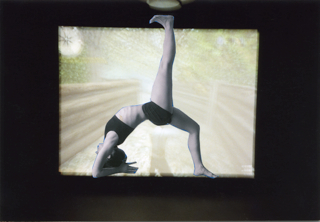
For many people across the world yoga is a way of ensuring a healthy life away from sedentary habits, a way of decreasing stress and increasing general wellbeing. However, the religious or spiritual element present in the practice of yoga may scare people who are concerned about religious purity or the integrity of their beliefs. Some might believe that yoga contradicts their religion, others might think of it as devil’s work. But is modern yoga a form of spiritual or religious practice?

Yoga as encountered in the West, is foremost based on Hatha Yoga and as such places emphasis foremost on bodily postures, breathing exercises and meditation. Indeed ‘yoga, as it appears today, is a recent interpretation of an ancient practice’ (Hoyez 2007: 114) which originates from the Indian subcontinent. Because of its origins yoga has often been thought as ‘hindu’, a term that is in itself very broad.

Mik365

Image © M.T. Vaczi

Yoga stems from the Vedas, the holy texts composed around 1900BC, which also form the basis of three major religions: Hinduism, Jainism and Buddhism. Patanjali’s ‘Yoga Sutras’, dating from approximately 2000 years ago is considered the first text that distinguishes Yoga from other systems of thought and religious practice. In his book Patanjali advocates a complete and complex way of life and not only a set of physical exercises. His ‘eight limbs’ of yoga, which still inform practice today, include abstentions (development of compassion), observances (awareness of ourselves and others), bodily postures (chanelling energy), breathing practices (controlling life force), abstraction (managing the senses), concentration (focusing) and meditation (total absorption) (Alter 2005). Each school of Yoga builds upon these elements, combining and interpreting them in a specific manner.

Often thought as an elaborate form of gymnastics, modern western yoga has lost most of its original philosophical underpinnings and has taken distance from most of its religious roots. Yoga has become a western practice whose popularity has been made possible by the process of individualization and its formation of ‘new-age’ spirituality, but also by the commodification of urban wellbeing. After becoming global, yoga has become increasingly decentralized and the Indian influence has been gradually lost. We live in a time of ‘indigenous yogas’ with a baffling diversity of styles and types, often adapted to specific local circumstances (Hoyez 2007) that highlight foremost wellbeing, health and internal peace. Furthermore, emphasis is placed foremost on its physical aspects while its spiritual or religious parts are contrived, if present at all. The specific combination of these factors makes modern yoga resemble more a therapeutic practice (Hoyez 2007) than a spiritual or religious one.

However, modern yoga is a therapeutic system of bodily exercises that also voices philosophical, cultural or political concerns. Furthermore, it is experienced as an active form of changing one’s life to the better. It emphasizes on self-realization (Alter 2004, De Michelis 2004). As such, modern yoga has constructed an alternative form of being religious or spiritual which creatively picks up and repackages a few elements of the Indian traditions while combining them with specific global and local concerns. For example, in yoga discourse, the consumption of raw- and super-foods is connected as much to the formation of a healthy body, to maintaining a good world energy, contributing to fair trade and to sustaining ecological system. These concerns are both extremely varied and tailored to specific audiences: yoga games targeting children require players to perform postures imitating animals while yoga for older adults yoga will make use of props for attaining some bodily postures (Patel el al. 2011). While children yoga will ‘play’ with the ‘inner child’, older adult yoga allows one to ‘find the right energetic balance’ and ‘age youthfully’. Furthermore, yoga can be practiced as a form of union with the ‘universe’, ‘God’, ‘nature’ or ‘oneself’, depending on the inclinations and beliefs of its practitioners. Some yoga classes use a borrowed religious imaginary: the yoga mat becomes a prayer mat while some postures recall prayer. Some classes include the chanting of Hindu sutras, others refer to a ‘life force’ or ‘energy’. A session may include a greeting of ‘namaste’ or a gesture of prayer. There might be a moment of meditation or time for chanting the ‘Om’ considered as the primordial sound by both Hindus and Buddhists. While these might be considered spiritual activities, they do not come to the fore in every yoga practice. Some classes and schools of yoga may make no overt reference to spirituality at all.

Nevertheless, modern yoga makes both physical and inner, ‘spiritual’ transformation possible, as yoga practitioners explained to me. Modern yoga, they highlighted, works through the effort of the body and ends in a general feeling of ‘feeling good about myself’. Yoga practices create an awareness of the self and a possibility of directly ‘improving’ one’s life. One realizes that ‘there is something bigger out there’. One ‘learns’ what are one’s possibilities, and through repeated exercise, learns also to ‘deal with that terrible pain’ and ‘overcome one’s limits’. Yoga offers its practitioners a permission to be happy ‘as I did the best I could for myself’ but also creates the feeling of ‘being in control’ and being in touch with ‘something bigger’. However, some of the practitioners I have been talking to have not described their experience as necessarily religious or spiritual, rather as an encounter with the ‘real self’ that requires no belief, but ‘just happens’.

This baffling inner diversity of practices points out that yoga is far from being a unitary phenomenon. Although most forms of yoga have their roots in the Indian subcontinent, each different school and group works with a specific interpretation of what yoga is, tailored to the more immediate concerns of western practitioners. The religious or spiritual content of yoga classes does not only depend on each yoga school’s approach, but also on the personal aspirations and capabilities of yoga practitioners. As such, western yoga practices have a different view of spirituality and make different use of religious elements then ‘Indian’ yoga, where the ultimate goal is moksha or liberation. Furthermore, western yoga can mainly be considered as a form of physical exercise that increases general wellbeing. In order to ensure and expand the state of wellbeing and relaxation, spiritual and religious practices may be used or hinted at. However, in the context of western modernity, yoga’s goal of ultimate liberation transforms foremost into the celebration and glorification of the self.

—–

Alter, J. S. 2005. Modern medical yoga: struggling with a history of magic, alchemy and sex. Leiden: Brill.

De Michelis, E. 2005. A history of modern yoga. London: Continuum.

Hoyez, A.-C. 2007. The ‘world of yoga’: The production and reproduction of therapeutic landscapes. Social Science & Medicine. 65 (1): 112-124.

Patel, N. K., S. Akkihebbalu, S. E. Espinoza, and L. K. Chiodo. 2011. Perceptions of a Community-Based Yoga Intervention for Older Adults. Activities, Adaptation & Aging. 35 (2): 151-163.

Strauss, S. 2005. Positioning yoga balancing acts across cultures. Oxford: Berg.

Recent blog postings:

  • When Regular PCR Tests Become Penance: Agamben, Biopolitics and Critical Religion  2 September 2022
  • Butler, gender performativity and religion 4 August 2021
  • Logic in Magic, and Human Cognition: Towards a new theory 17 March 2021
  • Politics of Love: Secularism, Religion, and Love as a Political Discourse 18 November 2020
  • The Contagion of White Christian Libertarianism and America’s Viral President 30 October 2020

Frequent blog tags:

academia Africa art Bible Biblical criticism body capitalism categories Christian church clash of civilisations concept of zero crisis Critical Religion culture economics economic theory education epistemology female genius feminism freedom of religion gender global higher education Hindu Hinduism humanities impact India interdisciplinarity interfaith dialogue international relations Islam Israel Japan Jew law liberal education managerialism Middle East mission history modernity music Muslim Naomi Goldenberg negation Northern Ireland nothing Palestine patriarchy performance politics postcolonial power REF religion religion-secular binary religious education religious freedom religious observance religious studies ritual sacred schools Scotland secular spiritualities stained glass theology United Kingdom university University of Stirling vestigial states women

Follow us on Twitter

Tweets by CriticoReligio

‘Like’ us on Facebook

‘Like’ us on Facebook

Our blog is published in association with

Ekklesia

Top Posts & Pages

  • Butler, gender performativity and religion
  • Fitzgerald, Timothy
  • Modern Government, Sovereignty and the Category of Religion: Beyond the Post-Secular
  • Nadadur Kannan, Rajalakshmi
  • Scholars
  • The Perry Expedition (1853-1854) and the Japanese Encounter with “Religion”
  • Home
  • On 'The Sacred Project of American Sociology'
  • Musicology and philosophy, religion and political science - the issue of interdisciplinarity
  • Is there anything good to be said for 'Religion'?

The Critical Religion Association…

... an international scholarly association pioneering intellectual engagement with questions on 'religion' and related categories.

About this site

This site is mostly maintained by Dr R Nadadur Kannan. Please contact us with any queries.
You can keep in touch with our work on Twitter, on Facebook, and through our mailing list.

About the blog

The Critical Religion blog is a shared (multi-author) blog.
The views represented are the personal views of individual authors and do not represent the position of the Critical Religion Association on any particular issue.

Copyright and Funding

Please note that all text and images on this site is protected by copyright law. Blog postings and profile texts are the copyright of their respective authors. We warmly welcome links to our site: each page/blog entry includes a variety of convenient sharing tools to help with this. For more information, see the note at the bottom of this page. Please do not reproduce texts in emails or on your own site unless you have express written permission to do so (if in doubt, please contact us). Thank you.

For a note about funding, see the information at the bottom of this page.

The CRA and the CRRG

The Critical Religion Association (this website) emerged from the work of the University of Stirling's Critical Religion Research Group created in early 2011. Interest in the CRRG grew beyond all expectations, and the staff at Stirling sought to address requests for involvement beyond Stirling by creating the CRA as an international scholarly association in November 2012. The CRRG passed on the blog and other key content to the CRA, and this is being developed here.
The CRRG website is now devoted exclusively to the scholarly work of the staff at the University of Stirling.

Critical Religion online

Apart from this website, the Critical Religion Research Group also has accounts elsewhere online:
- we are on Twitter;
- we are on Facebook;
- we have audio on Audioboo;
We will soon also offer video.

RSS feeds

  • RSS - Posts
  • RSS - Comments

Administration

  • Create account
  • Log in
  • Entries feed
  • Comments feed
  • WordPress.com

Blog at WordPress.com.

  • Subscribe Subscribed
    • The Critical Religion Association
    • Join 178 other subscribers
    • Already have a WordPress.com account? Log in now.
    • The Critical Religion Association
    • Subscribe Subscribed
    • Sign up
    • Log in
    • Report this content
    • View site in Reader
    • Manage subscriptions
    • Collapse this bar
 

Loading Comments...