• Home
  • What is Critical Religion?
  • Blog
  • Events
  • Scholars
  • Links
  • Recordings
  • Organisation
  • Ekklesia
  • Contact

The Critical Religion Association

~ Critical Approaches to the Study of Religion

The Critical Religion Association

Tag Archives: Critical Religion

Contextualizing yoga: modern practices in a western world

03 Monday Feb 2014

Posted by Sihaya in Critical Religion, Erasmus University of Rotterdam

≈ 3 Comments

Tags

Buddhist, Critical Religion, Hindu, religion, spiritualities, yoga

For many people across the world yoga is a way of ensuring a healthy life away from sedentary habits, a way of decreasing stress and increasing general wellbeing. However, the religious or spiritual element present in the practice of yoga may scare people who are concerned about religious purity or the integrity of their beliefs. Some might believe that yoga contradicts their religion, others might think of it as devil’s work. But is modern yoga a form of spiritual or religious practice?

Yoga as encountered in the West, is foremost based on Hatha Yoga and as such places emphasis foremost on bodily postures, breathing exercises and meditation. Indeed ‘yoga, as it appears today, is a recent interpretation of an ancient practice’ (Hoyez 2007: 114) which originates from the Indian subcontinent. Because of its origins yoga has often been thought as ‘hindu’, a term that is in itself very broad.
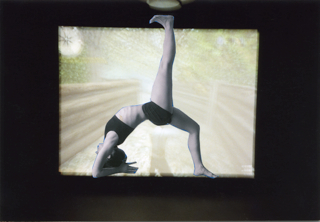
Mik365

Image © M.T. Vaczi

Yoga stems from the Vedas, the holy texts composed around 1900BC, which also form the basis of three major religions: Hinduism, Jainism and Buddhism. Patanjali’s ‘Yoga Sutras’, dating from approximately 2000 years ago is considered the first text that distinguishes Yoga from other systems of thought and religious practice. In his book Patanjali advocates a complete and complex way of life and not only a set of physical exercises. His ‘eight limbs’ of yoga, which still inform practice today, include abstentions (development of compassion), observances (awareness of ourselves and others), bodily postures (chanelling energy), breathing practices (controlling life force), abstraction (managing the senses), concentration (focusing) and meditation (total absorption) (Alter 2005). Each school of Yoga builds upon these elements, combining and interpreting them in a specific manner.

Often thought as an elaborate form of gymnastics, modern western yoga has lost most of its original philosophical underpinnings and has taken distance from most of its religious roots. Yoga has become a western practice whose popularity has been made possible by the process of individualization and its formation of ‘new-age’ spirituality, but also by the commodification of urban wellbeing. After becoming global, yoga has become increasingly decentralized and the Indian influence has been gradually lost. We live in a time of ‘indigenous yogas’ with a baffling diversity of styles and types, often adapted to specific local circumstances (Hoyez 2007) that highlight foremost wellbeing, health and internal peace. Furthermore, emphasis is placed foremost on its physical aspects while its spiritual or religious parts are contrived, if present at all. The specific combination of these factors makes modern yoga resemble more a therapeutic practice (Hoyez 2007) than a spiritual or religious one.

However, modern yoga is a therapeutic system of bodily exercises that also voices philosophical, cultural or political concerns. Furthermore, it is experienced as an active form of changing one’s life to the better. It emphasizes on self-realization (Alter 2004, De Michelis 2004). As such, modern yoga has constructed an alternative form of being religious or spiritual which creatively picks up and repackages a few elements of the Indian traditions while combining them with specific global and local concerns. For example, in yoga discourse, the consumption of raw- and super-foods is connected as much to the formation of a healthy body, to maintaining a good world energy, contributing to fair trade and to sustaining ecological system. These concerns are both extremely varied and tailored to specific audiences: yoga games targeting children require players to perform postures imitating animals while yoga for older adults yoga will make use of props for attaining some bodily postures (Patel el al. 2011). While children yoga will ‘play’ with the ‘inner child’, older adult yoga allows one to ‘find the right energetic balance’ and ‘age youthfully’. Furthermore, yoga can be practiced as a form of union with the ‘universe’, ‘God’, ‘nature’ or ‘oneself’, depending on the inclinations and beliefs of its practitioners. Some yoga classes use a borrowed religious imaginary: the yoga mat becomes a prayer mat while some postures recall prayer. Some classes include the chanting of Hindu sutras, others refer to a ‘life force’ or ‘energy’. A session may include a greeting of ‘namaste’ or a gesture of prayer. There might be a moment of meditation or time for chanting the ‘Om’ considered as the primordial sound by both Hindus and Buddhists. While these might be considered spiritual activities, they do not come to the fore in every yoga practice. Some classes and schools of yoga may make no overt reference to spirituality at all.

Nevertheless, modern yoga makes both physical and inner, ‘spiritual’ transformation possible, as yoga practitioners explained to me. Modern yoga, they highlighted, works through the effort of the body and ends in a general feeling of ‘feeling good about myself’. Yoga practices create an awareness of the self and a possibility of directly ‘improving’ one’s life. One realizes that ‘there is something bigger out there’. One ‘learns’ what are one’s possibilities, and through repeated exercise, learns also to ‘deal with that terrible pain’ and ‘overcome one’s limits’. Yoga offers its practitioners a permission to be happy ‘as I did the best I could for myself’ but also creates the feeling of ‘being in control’ and being in touch with ‘something bigger’. However, some of the practitioners I have been talking to have not described their experience as necessarily religious or spiritual, rather as an encounter with the ‘real self’ that requires no belief, but ‘just happens’.

This baffling inner diversity of practices points out that yoga is far from being a unitary phenomenon. Although most forms of yoga have their roots in the Indian subcontinent, each different school and group works with a specific interpretation of what yoga is, tailored to the more immediate concerns of western practitioners. The religious or spiritual content of yoga classes does not only depend on each yoga school’s approach, but also on the personal aspirations and capabilities of yoga practitioners. As such, western yoga practices have a different view of spirituality and make different use of religious elements then ‘Indian’ yoga, where the ultimate goal is moksha or liberation. Furthermore, western yoga can mainly be considered as a form of physical exercise that increases general wellbeing. In order to ensure and expand the state of wellbeing and relaxation, spiritual and religious practices may be used or hinted at. However, in the context of western modernity, yoga’s goal of ultimate liberation transforms foremost into the celebration and glorification of the self.

—–

Alter, J. S. 2005. Modern medical yoga: struggling with a history of magic, alchemy and sex. Leiden: Brill.

De Michelis, E. 2005. A history of modern yoga. London: Continuum.

Hoyez, A.-C. 2007. The ‘world of yoga’: The production and reproduction of therapeutic landscapes. Social Science & Medicine. 65 (1): 112-124.

Patel, N. K., S. Akkihebbalu, S. E. Espinoza, and L. K. Chiodo. 2011. Perceptions of a Community-Based Yoga Intervention for Older Adults. Activities, Adaptation & Aging. 35 (2): 151-163.

Strauss, S. 2005. Positioning yoga balancing acts across cultures. Oxford: Berg.
Conference Report: Women in Secularism 2

07 Tuesday Jan 2014

Posted by Cameron Montgomery in Critical Religion, University of Ottawa

≈ 3 Comments

Tags

atheism, Christian, Critical Religion, Naomi Goldenberg, patriarchy, religious studies, Richard Dawkins, secular, vestigial states, women

Washington, D. C., May 17-19, 2013

Washington, D. C., May 17-19, 2013

Washington, D. C., May 17-19, 2013

October 2013:
Note on Critical Religion:
It is my assumption that scholars engaged in critical religion are essentially the atheists, feminists and de-colonists in the field of Religious Studies. I had dinner with a group of Religious Studies majors a few nights ago, and I was interested and somewhat disappointed to note that they generally defined ‘the religious’ as those who self-identified in that way. While Religious Studies departments can be replete with scholars drawing lines around ‘religious’ art or ‘religious’ clothes, implicitly using the adjective as an analytical category rather than as data itself, to my understanding, ‘Critical Religion’ particularly is a meta-religion-studies, looking at what people are calling ‘religion’, who is employing this label and for what reasons they are doing so. Critical Religion means examining the modern social attitude called ‘religious’, rather than apologetically calling human behaviour ‘religious phenomena’, something which does not exist, so naturally it is impossible to track or even define. Feminists have challenged and reconstructed history with a place for women within it, and de-colonists have given voice to a historically silent subaltern perspective. A large and contemporary body of work in Religious Studies is in many ways surprisingly still engaged in writing histories as (patriarchal, colonizing) Cultural Christians. Feminist and de-colonial theory, devoted to revealing and questioning unexamined systems of power, are the avenues which lead to Critical Religion. This seems to produce atheism, which is why the Women in Secularism conference series is relevant to Critical Religionists.

Atheism & Feminism

On May 17, 2013, some 50 core participants gathered at the Downtown Marriott Centre in Washington D. C. for the second annual conference about women’s involvement in secular movements. Up to 200 others attended for the keynote speakers. The conference was organized by the Centre For Inquiry, a not-for-profit organization which mobilizes on a variety of issues surrounding ‘secular’ concerns, such as scientific education in public schools, grief services for nonbelievers, and the demystification and de-vilification of all things contraceptive.

Over the course of the weekend, women engaged in atheist feminist activism had the opportunity to meet and discuss their work. Some women were best-selling authors, others scientists in the academy, and others were leaders in support groups within their communities. It is important to note that most of these women were and are actively engaged in journalistic activism via online blogs, Twitter, and other social media. (For a list of all the speakers and their lectures, click here.)

Toxic Religion and Toxic Patriarchy are the Same

Many of the activist-oriented conference speakers and panelists encouraged a coalition between the feminist movements and the secular ones, both to get more feminists to be atheists and to make the secular movement less elitist and oppressive. Essentially the secularists were engaged in convincing the feminists of the toxicity of religion and religion’s interference with the state, and the feminists were convincing the secularists that the fight to empower women is the keystone in reducing religion’s political influence. The result was feminists getting equipped with a more detailed understanding of the role of Christianity and Islam and patriarchy, and the secularists gaining a deeper appreciation for the role of feminist struggles in working towards secularism. Secularists and feminists were engaged in a process of seeing the dismantling of toxic masculinity and the dismantling of toxic religion as the same endeavour.

CFI Washington D. C.’s president and conference organizer Melody Hensley said that “issues of secular movements are issues of women’s safety and freedom.” The anti-feminist thrust of the predominant atheist movements, led by Richard Dawkins and others, suggests this is not a universal notion. Atheist groups consisting largely of wealthy, educated white males are focused on the science of anti-God-ness. Dawkins calls himself a “cultural Christian”, supporting ‘traditional marriage’ and other Christian constructions while intent on disproving the existence of an all-powerful God, male or otherwise. It follows that Dawkins supports ‘traditional’ gender roles and the idea of the father as head of the household. In this way, atheist movements may protect and inscribe oppression of women; they can erode Grand Narratives in one way, and perpetuate them in others. While I see feminism and atheism as part of the same project, it troubles me that this Dawkinsian atheism, disproving God with science, could potentially be the extent to which the secular movement goes. It is incredibly important to demonstrate the connection between the cultural institutions of Christianity and the cultural institutions of patriarchy. As Kathlyn Pollitt said, “religious texts are the rulebooks of misogyny.” Radio personality Sarah Moglia pointed out that statistically speaking, all social movements that do not reach the working classes (and women make up 70% of the world’s poor) are doomed to fail as they do not reach the institutionalization phase. The conference made clear that secularism as a social movement will not take root until it is inclusive, pervasive and skeptical, deeply penetrating not only the imaginary god but the system which both creates and is created by notions of it.

Another important discussion at this conference was that of nomenclature. There were many discussions and disagreements about what the movement should be called, how people should self-identify, and other issues which can be (and were) paralleled to the gay rights movement. I got the sense generally that although there were a few people who disliked the ‘secular’ title and preferred out-and-out atheist, there was an acceptance of allies in the movement. It was noted that as the term ‘feminist’ often precipitates a strong counter-reaction, so the word ‘atheist’ denotes criticism of the hegemonic paradigm and can’t be softened. This makes me think of Richard Cimino’s definition of atheism, which is “an oppositional identity in a culture of theism.” This oppositional identity creates many apologists, and potential allies of the secular (and women’s liberation) movements often focus on religion as a notion of ‘The Good’, or the positive effects of religions rather than the endemic oppression they inscribe. There has also been a great deal of ‘historical’ focus on religious persecution and religious freedom, and church-related abuses and violence are called ‘situational’, or ‘representative of the times’. Pollitt remarked that one need only read the Bible itself for an account of human rights abuses. The pervasive desire to imagine religion as ‘The Good’ results in a social forgetfulness that obscures the modern and political projects deploying God in state and in law. God went on the money and in the Pledge in the United States in the 1950s, and in contrast, France separated church and state in 1905. Investing the state with God-the-Father, and pretending he was always there is both anachronistic and political. Speaker and writer Jennifer Hecht notes that the feminist atheist movement needs to “establish a long history of secular women because the Christian world can be overwhelming,” and that “we have to be the ones to cultivate this memory.” When asked what the future would look like if atheist and feminist movements were successful, Pollitt responded that it would look as though atheism and feminism had always been popular. Whether or not that is the case remains to be seen, but every story told and every voice that speaks moves the discourse forward.

Critical Religion

One of the most interesting parts of this conference was that scholars of Religious Studies were not invited. The doctors of Science, Political Studies, History and Women’s Studies seemed to recognize that much of the work in Religious Studies, while likely well-intentioned, is apologetic and somewhat evangelical. Ultimately, Religious Studies scholars seem to be more committed to their subjects of study than to human rights, or perhaps conventional Religious Studies departments do not offer the anti-oppressive theoretical education which has become typical in some Social Sciences.

Critical Religionists are often adept at pointing out the flaws of our peers, but the work which is crucial to developing the movement lies in constructing better theoretical frameworks than the ones which exist currently in the field of Religious Studies. Work like Goldenberg’s Vestigial State Theory move beyond “standing in the conceptual space carved out by theistic religion” (Sam Harris, 2007). Indeed, scholars of religion are only beginning to have the language with which to describe “vestigial states called ‘religion’”. Feminist and post-colonial academic and activist circles are a fantastic place to see these developing frameworks in action; these are the frameworks that Critical Religion needs.

—-

Videos of the entire conference can be found here.

[Editor’s note: This article was modified on 11 April 2016 at the author’s request]

Rethinking Secularism (Again)

10 Tuesday Dec 2013

Posted by pereriknilsson in Critical Religion, Uppsala University

≈ 1 Comment

Tags

Critical Religion, France, José Casanova, secular, secularism, secularization

It appears to me that we are and have been for some time in the midst of a formative period of ‘secularism studies’. It also appears to me that this formative period is, and has been, marked by a desire for the search of the true essence of secularism.

It moreover seems to me as the will to hegemonize this newly emerging academic field is guided by a neglect of the insights from related disciplines such as critical religion theory and postcolonial research on religion, namely that a) there is no sui generis religion to be found which should call for caution in searching for a sui generis secularism, b) religion and secularism are contingently articulated categories bound to power and ideology, c) the secular state apparatus’ judiciary is most often involved in defining the boundaries of the religious and the secular by defining religion, d) the last centuries’ scientific articulations of religion have had deep ideological and political implications not the least in creating a European exception and a European universalism, and e) that these articulations have also legitimized Western politics and expansion such as colonialism, neo-colonial politics, and imperialist ambitions.

Now, the sociologist José Casanova has forcefully argued that the assumption that secularization is a historical fact attained a ‘truly paradigmatic status within the social sciences’ from the 19th century and onward. And that it was first during the latter half of the 20th century that theories of secularization were developed into more comprehensive systems of thought (with for example Thomas Luckman, Peter Berger, and Bryan Wilson). Together with the development of theories of secularization we have also seen a rise in interest and theorization of the ‘secular’ and ‘secularism’, especially during the Post Cold War era. The reasons for this interest can be explained by the somewhat sudden realization that ‘religion’ not only still had a grip of human daily life around the globe, but that it could be a force for political action where 9/11 is often taken as the emblematic evidence. Following Casanova’s line of argument, the reason for neglecting religion as a social and political force can thus be explained by the hegemony of the secularization thesis in the humanities and social sciences. ‘Religion’ is for example still a non-existent subject in many social science departments in European and American universities.

Recent research on the genealogy of the trinity ‘secularization-secular-secularism’ have helped to highlight and explain many of the epistemic and hegemonic assumptions that are inbuilt into the various disciplines of the humanities and the social sciences. However, given the recent interest in the trinity it is a curious thing that it has been ‘rethought’ so many times. Here I will discuss one specific ‘rethinking’ of secularism.

Rethinking Secularism (Oxford UP, 2011) is the name of a recent publication by a number of eminent scholars working on ‘secularism’ from a wide variety of angles. The editors of the book are Craig Calhon, Mark Juergensmeyer, and Jonathan VanAntwerpen. The title indicates first of all that secularism has been thought and secondly that this ‘thought’ secularism is in need of revision. My first presentation as a graduate student in 2007 was also called Rethinking Secularism. This is not to suggest that I was ahead of the above publication, nor is it to suggest that it plagiarizes my presentation, it certainly does not. Instead, I wonder what exactly I thought was in need of being rethought with secularism? Today when I look back at the presentation, I guess I wanted to pose a critique to what I understood to be a reigning hegemony in analysis of secularism. As it turned out, my choice in naming my endeavor as a ‘rethinking’ was perhaps unfortunate since what I ended up doing in my thesis was a deconstruction or on undoing of secularism (that is French secularism, or laïcité), rather than rethinking ‘it’. And herein lies a problem in the rethinking of something since it presumes that there is something to rethink.

To be clear, the editors of Rethinking Secularism state that secularism is “often defined negatively” against religion, meaning that the category “in itself” is not “neutral”. (loc. 168) I could not agree more. My own epistemological home ground (in discourse theory, poststructural theory, postcolonial theory, and critical religion theory) and my own research suggest that contemporary (French) secularism is a purely negative category. It is given meaning differently in different contexts and its articulated differently in different discourses. In France, although secularism is a highly non-contested category, there is no consensus on its essential meaning among researchers, among politicians, or among political activists; e.g. it is an important identity marker for the political left as well as the political far-right. Just as the editors suggest, secularism is here given meaning through a negative identification process based on the logic ‘I am not what you are’. This logic is made possible through a negative secular-other, which then most often is ‘religion’.

Based on the editors’ description of ‘secularism’ as a negative category, their conclusion comes as somewhat of a surprise to me. They suggest: “Secularism should be seen as a presence. It is something, [a phenomena in its own right], and it is therefore in need of elaboration and understanding”. (loc. 169) The editors thus seem to suggest that secularism, although being a negatively articulated political concept, still has a positive core, an essence if you may. In other words, they seem to suggest that although secularism is a political category void of essence, we should still act as if essence there is and furthermore that it is the task of the researcher in the social sciences and the humanities to find out what this essence is.

One seminal case in point in finding out this ‘something’ of secularism is the chapter in Rethinking Secularism written by the aforementioned José Casanova. Here I will only touch upon Casanova’s discussion of a) the relation between secularism, secularization, and the secular and b) the relation between secularism and religion.

a) Casanova sets out to analytically separate the trinity of secularization-secular-secularism. He argues that ‘the secular’ is a modern “epistemic category”, that ‘secularization’ is an “analytical conceptualization of modern world-historical processes”, and that ‘secularism’ is a “worldview and ideology”. (loc. 1308) Casanova then goes on to suggest that secularism “refers more broadly to a whole range of modern secular worldviews and ideologies which may be consciously held and explicitly elaborated into philosophies of history and normative-ideological state projects, into projects of modernity and cultural programs, or, alternatively, it may be viewed as an epistemic knowledge regime that can be he held unreflexively [sic] or be assumed phenomenologically as the taken-for-granted normal structure of modern reality, as a modern doxa or an ‘unthought’”. (loc. 1329) If ‘the secular’ is a modern ‘epistemic category’ and ‘secularization’ an ‘analytical conceptualization of modern world-historical processes’ I wonder what separates these two categories from ‘secularism’ (an ‘epistemic knowledge regime’ and a ‘philosophy of history’). If ‘secularism’ is such a potent ‘something’ that it enters into our ‘unthought’, if it is an epistemic knowledge regime creating a philosophy of history, is not the pertinent question to ask how secularism produces notions of secularization as an historical process and the secular as an epistemic category in the first place?
It seems to me that Casanova takes for granted that ‘secularization and ‘the secular’ have an independent meaning outside of ‘secularism’ and that it is secularism that somewhat perverts their true meaning. This leads Casanova to argue that “the core of the [secularization] thesis, namely, the understanding of secularization as a single process of functional differentiation of the various secular institutional spheres of modern societies from religion, remains relatively uncontested”. (loc. 1463) The problem with secularism is according to Casanova that it renders “the particular Western Christian mode of secularization into a universal teleological process of human development from belief to unbelief, from primitive to irrational or metaphysical religion to modern rational postmetaphysical secular consciousness”. (loc. 1430) Instead Casanova suggests, we should acknowledge secularization “for what it truly was, namely a particular Christian and post-Christian historical process, and not, as Europeans like to think, a general or universal process of human or societal development”. (loc. 1560.)
While I believe Casanova to be right in the assumption that one fundamental problem with secularism is how it seeks to universalize the theory of secularization, I am not so sure that a) secularization is a historical European fact and b) that ‘Europeans’ disagree here. One of the ideological problems, to use Casanova’s lingua, is that irrespectively of whether the secularization thesis is taken to be applicable on the entire globe or only on Europe, it still feeds into a modernist imaginary where Europe becomes the only successfully developed secular universal civilization, exceptionally developed and/or exceptionally unique.

b) To distinguish and qualify the analysis of secularism Casanova suggests that it “may be fruitful to begin by drawing an analytical distinction between secularism as statecraft doctrine and secularism as ideology”. (loc. 1591) With secularism as statecraft Casanova understands “simply some principle of separation between the religious and political authority… Such a statecraft doctrine neither presupposes nor needs to entail any substantive “theory,” positive or negative, of “religion”. (loc. 1594) However, Casanova argues that “the moment the state holds explicitly a particular conception of ‘religion’, one enters into the realm of ideology. One could argue that secularism becomes an ideology the moment it entails a theory of what ‘religion’ is or does”. (loc. 1597) If secularism as statecraft ‘simply’ is the separation of the ‘religious’ and the ‘political authority’, how is this separation done without the state deciding where to draw this separation by deciding what ‘religion’ is and does? Since one of the core arguments of Rethinking Secularism is that secularism and religion are negative categories, I cannot see how a non-ideological secularism could be fashioned at all, that even the ‘simple’ separation of the ‘religious’ and ‘political authority’ is a performative act entangled with power and ideology.

To conclude: I wonder if the desire to be a part of the emerging field of secularism studies does not lead some researchers into curious paradoxical epistemological predicaments, as I have tried to (very briefly) show here. It is as if the lessons from critical disciplines are listened to but not heard, as if they are brought up to be neglected, as if certain scholars know that it is very complex but at the same time ignores this complexity.

“Overt and Conspicuous”: Religion and the Charter of Québec Values

18 Monday Nov 2013

Posted by Gabrielle Desmarais in Critical Religion, University of Ottawa

≈ 1 Comment

Tags

Canada, Critical Religion, freedom of religion, human rights, law, Quebec, religious freedom, religious symbolism

Religious freedom has become a a hot topic in the world of Canadian law again this autumn, as the Parti Québécois presented a new bill, Bill 60, which seeks to enact the “Charter of Québec Values”. The proposed charter aims to prohibit the wearing of “overt and conspicuous” religious symbols by government officials and public servants. The rumoured charter was widely discussed across Canadian news outlets throughout September and October, and was finally tabled in front of the Québec legislature on November 7th, 2013 as the “Charter of Québec Secularism”. The proposed new law would amend the Québec Charter of Human Rights and Freedoms in an attempt to prevent religious symbols to form part of the public sphere; this echoes the measures of state secularism eschewed by other governments, such as that of France.

The bill was the object of much controversy as the stipulations of the charter suggest “common values” that target the removal of hijab, yarmulkes and turbans for the purposes of equality. Below are the widely-circulated images which became representative of the guidelines proposed by Bill 60:

Figure 1: Types of permitted religious symbols.

Figure 2: Prohibited religious symbols.

According to ReligionNews.com, the charter “would prohibit public employees from wearing large crosses and crucifixes, Islamic headscarves, Sikh turbans and Jewish yarmulkes as a way to establish ‘religious neutrality’ in public. The prohibitions would apply to civil servants, teachers, law enforcement officers, firefighters, doctors, nurses and public day care employees. Elected officials would be exempt.” Thus, anyone seeking to serve in the public service would be required to disregard their own personal religious practices if these could be interpreted as “overt”.

While media reports and online discussions have concentrated on the possibility of these guidelines being a disguise for racist or xenophobic motivations, I believe they are missing the essential dilemma that characterizes the problems with Bill 60. The proposed measures aim to limit the infringement of citizens’ religious freedoms by preventing others from imposing their beliefs by virtue of wearing visible symbols. However, as I have written before, there is no official agreement in Canadian federal or provincial law about what constitutes a “religious symbol”. Freedom of religion has been discussed in Canadian human rights law since the 1950s and no unanimous decision about what constitutes “religion” has been reached. Therefore, the allegations that the guidelines provided by Bill 60 are racist or targeted toward minority groups skim the surface of a deeper, more troubling realization: that perhaps there is no such thing as stable concepts of “religion” and “secular”, and that the insistence that there is such a distinction leaves room for deeply troubling lines to be drawn arbitrarily.

The realization of the lack of objective, clear-cut categories and its consequences is at the heart of work done by scholars of critical religion. My recently completed Master’s dissertation, as well my first blog post for the Critical Religion Association, have dealt with the consequences of work discussing critical religion in relation to processes of law.  I argued that defining what is “religious” and what is “secular” for the purposes of enforcing the religious freedom in Canada is impossible, as provincial and federal law do not (and cannot) define “religion” in their most important documents. The definition of “religion” is left to the interpretation of the courts at key moments of dissension; the courts, in turn, rely on both outdated legislation and on precedence dated back to an era where Canada was understood to be “a Christian country”.

Attempts have been made to remove tradition-specific language from legal statements, but without the context from which the word “religion” and its cognates emerge, statements about “religion” and its essence leave an overwhelming amount of room for processes of power to dictate, at any point in time, what is permitted and what is prohibited. The decision of what constitutes a religious symbol is left in the hands of lawmakers, who necessarily have their own idea of what religion “is”. Little room is left for debate over whether the symbols depicted in Figures 1 and 2 are understood by their wearers as religious. Those who wear items such as the hijab or the yarmulke might not categorize those items as “religious”, but rather as “cultural” or “traditional”. They may even consider these reasons to be as equally important as so-called “religious” values, and believe that these deeply-held values should be honoured in a similar fashion.

Therefore, the line that the “Charter of Québec Values” draws between permitted “religious” symbols and prohibited ones assumes a number of things. First, it assumes that the distinction between “religion” and “secular” is clear-cut and that lawmakers have an objective view of what counts as a religious symbol.  Secondly, it assumes that that “objective” point of view is somehow completely segregated from a history of precedence that relies on Christian categories from the 1950s. Thirdly, the Parti Québécois even assumes that the residents of Québec would only accept a very narrow range of symbols in the public sphere!

I believe it would be helpful to those seeking to analyse this recent development in Canadian law (and, for that matter, any developments regarding “religion” in human rights law worldwide) to take into account the arguments of scholars in critical religion. Using these insights, critics may be able to tackle what is, as I see it, the larger issue: that the ongoing existence of “religion” as a legal matter without a clear definition leaves room for harmful assumptions to be made and for these assumptions to become law.

Austerity and the Language of Sacrifice

15 Tuesday Oct 2013

Posted by Dr Brian W Nail in Critical Religion, University of Luxembourg

≈ Comments Off on Austerity and the Language of Sacrifice

Tags

austerity, Critical Religion, economics, global, market, sacrifice, unemployment

Journalists frequently invoke the language of sacrifice when describing the consequences of the austerity measures currently being implemented in Britain and across much of Europe. Similarly, politicians have long recognized the rhetorical force of the word ‘sacrifice’, but they often find more subtle ways of embedding the language of sacrifice within speeches by fusing their rhetoric with sacred symbols and ideals which derive their power from longstanding notions of national identity. Thus national symbols that have traditionally garnered powerful sentiments of loyalty to the state are rhetorically translated into an implied sense of fidelity to the prevailing political ideology of the present. In his recent speech at the opening of Parliament, David Cameron made a quick transition from acknowledging fallen British soldiers who “have made the ultimate sacrifice” while fighting in Afghanistan to applauding the government for cutting the national deficit by a third. The implication seems to be that, like the good soldiers who died for their country, British citizens must also be willing to make great sacrifices in order to secure the economic future of their nation. By juxtaposing the deaths of British soldiers with the supposed success of his economic policies, Cameron unwittingly reveals the extent to which the sacrificial rhetoric of austerity is invariably associated with very real human costs. In terms of the UK government’s current policies, these costs are directly linked to an erosion of socio-economic rights in Britain.

The erosion of socio-economic rights that is currently underway is perhaps difficult to detect in the political discourse of austerity because its rationale is framed within the language of economic recovery. In recent speeches, Cameron has continually referred to the need for Britain to regain its competitiveness in the global marketplace. Improving Britain’s competitiveness means making it into the sort of place where corporations and investment firms want to do business. Two of the most direct ways of accomplishing this aim are cutting corporate tax rates and creating what is often referred to as a ‘more flexible labour market.’ Although economists may suggest that there are complex theoretical and mathematical contingencies underlying these institutional policies, the sacrificial logic of these two issues is not difficult to ascertain. Within the so-called developed economies of the West, corporations do not equate to the job producing powerhouses of manufacturing that once drove the industrial economy. The most profitable industries are banking and finance, and thus corporate tax breaks equate to lightening the tax burdens for the very institutions that played a significant part in bringing about the financial crisis in the first place.

Creating ‘a more flexible labour market’ is essentially economic jargon for reducing the employment protection legislation which ensures that employees are treated fairly and paid appropriately. A recent report from the OECD suggests that changes to employment protection legislation which make it easier for employers to terminate jobs should be accompanied by the development of public policies such as job-search assistance programmes and unemployment benefits that help to minimize the social impact of unemployment. A combination of public spending cuts and loosening of employment protection legislation has contributed to even greater economic uncertainty for many workers in Britain. If the current government’s policies are implemented, Britain will be according to one perspective a better place to do business, but it will be a rotten place to work.

As it stands, the conflict between society’s commitment to social welfare and the maintenance of the financial services industry is at the forefront of political debates in Britain and across the globe. And although it seems that these debates are more fierce than ever, from the earliest times the pursuit of money has had a polarizing effect upon society not simply because it goes hand-in-hand with the attainment of social status, but perhaps most importantly because the accumulation of wealth is also a means of securing political power. In his pseudo-historical novel Picture This, Joseph Heller explores the inherent antagonism that exists between the culture of speculative investment and the pursuit of the public good. In Heller’s own vitriolic fashion, the novel’s narrator describes the sociological and cultural consequences of the invention of money:

With the invention of money by the Lydians in the seventh century before Christ the possibility of profit spread, and as soon as there was profit, there were people who wanted to make it, more than they wanted to make anything else. And whenever there is more money to be made from money than from anything else, the energies of the state are likely to be devoted increasingly to the production of money, for which there is no community need, to the exclusion of those commodities that are required for health and well-being, and contemplation. . . . There will be many who flourish in this environment of finance, and a great many more who can go straight to hell (1989, 55–56).

Contrary to the fundamental doctrine of economic liberalism which maintains that in the free market everyone is a winner, Heller’s narrative highlights the ways in which the pursuit of monetary wealth within a society has a tendency to draw the energies of the state away from matters of social well-being and redirect its political energy towards the maintenance of financial institutions. The speculative activities that pervade the ‘environment of finance’ result not only in a highly unstable economic basis for society, but the inevitable costs associated with these activities, in the end, come at the expense of public funds formerly dedicated to the welfare of the state. Thus, according to Heller’s account, the ‘environment of finance’ that is made possible through the invention of money is not only presented as a risky basis upon which to build a nation’s economy, but most importantly, such speculative activity  has a deleterious effect upon the socio-economic rights that are essential to a civil society.

The literary critic Ian Gregson suggests that a pervasive theme in Heller’s work is the “impact of institutions on what is conventionally taken to be ‘the individual’—how thoroughly the supposed autonomy of that individual is compromised by far larger political and cultural forces”(2008, 31). In Picture This, the narrator’s suggestion that those who do not flourish in a world dominated by the uncertainties of the environment of finance “can go straight to hell” could be considered more than merely a crass turn of phrase. In reality, those who end up the casualties of market forces not only suffer financially, but they also suffer a loss of political and social agency in a culture where wealth has become a measure of personhood. Falling off the bottom rung of the socio-economic ladder is tantamount to a descent into hell. Meanwhile the financial institutions and administrative overseers who facilitated these exchanges have only been subject to legal action in a handful of extreme cases. Their redemption, it seems, is predicated upon the fact of their irreplaceability—the environment of finance assumes the status of a self-perpetuating system that constantly seeks to transform every loss into a gain by shifting the sacrificial costs of its own existence onto a substratum of society to whom it bears no binding moral obligations.

Since the beginning of the credit crisis in 2008, austerity measures targeted at reducing public spending and supposedly stimulating economic growth have resulted in a substantial erosion of socio-economic rights in Britain and throughout the European Union. In his 1974 study of Third World socio-economic development and political ethics, Peter Berger claims that “The history of mankind is a history of pain” (1974, 163). And he describes the principles that guide politicians in the development of economic policy as a “calculus of pain.” Decisions that often result in actual physical and psychological trauma are considered “in terms of costs and benefits, of input and output.” According to Berger, “Such analysis is typically very technical, and generally borrows concepts and techniques from economics, even where non-economic phenomena are involved” (1974, 164). Most importantly, he points out the rather obvious but nonetheless crucial fact that underlying the economic data on unemployment and income distribution there is the reality of human suffering and death.

In a recent study of the impact of austerity on public health inequalities, researchers concluded that “the burden of budget cuts is falling most greatly on disabled, low-income and unemployed persons”(Reeves et al. 2013). Focusing primarily on already economically depressed parts of the United Kingdom, the study reports a substantial increase in suicide rates which correlates with increased rates of unemployment particularly among public sector workers. It also predicts that changes to disability allowances and housing benefits will have a detrimental effect upon individuals who are already among the most economically deprived in Britain. Consequently, the study concludes that “austerity policies can be expected to impact health in several ways, each difficult to reverse or avoid in the absence of strong social safety nets” (Reeves et al. 2013, 4). These findings point to the real costs underlying the sacrificial rhetoric of austerity. The socio-economic rights which have arguably served to define Britain as a civil society are currently under threat, but it remains to be seen whether or not the nation will seek a viable alternative to the risky sacrificial games that must be played in the ‘environment of finance.’ Reflecting upon the internecine conflicts that plagued Western Europe in the 16th century, the narrator of Picture This notes that “If they were fighting over money, Aristotle could have told them that it was not worth the struggle” (Heller 1989, 186). If money alone is not worth the struggle, then perhaps it is time to ask Aristotle what is.

Works Cited:

Berger, Peter L. 1974. Pyramids of Sacrifice: Political Ethics and Social Change. Harmondsworth: Penguin Books.

Gregson, Ian. 2008. “Joseph Heller’s Allegories of Money.” In Character and Satire in Post War Fiction, 31–53. London: Continuum.

Heller, Joseph. 1989. Picture This. London: Pan Books; Picador.

Reeves, Aaron, Sanjay Basu, Martin McKee, Michael Marmot, and David Stuckler. 2013. “Austere or Not? UK Coalition Government Budgets and Health Inequalities.” Journal of the Royal Society of Medicine (September 11)

Critical Politics

07 Monday Oct 2013

Posted by Timothy Fitzgerald in Critical Religion, University of Stirling

≈ 2 Comments

Tags

categories, church, Critical Religion, economics, India, Japan, John Locke, politics, religion, secular

Our blog ‘critical religion’ receives contributions from many people, and they usually have the terms ‘critical’ and ‘religion’ in them somewhere. Some are much more clearly theorised than that. My own understanding of ‘critical religion’ is specific. For me, ‘critical religion’ is always about ‘religion and related categories’, because I argue that religion is not a stand-alone category, but is one of a configuration of categories. On its own, ‘religion’ has no object; it only seems to do so. Religion is a category that is deployed for purposes of classification, but it does not stand in a one-to-one relationship with any observable thing in the world. In modern discourse, ‘religion’ works as half a binary, as in ‘religion and secular’ or ‘religion and [secular] politics’. When we talk about religion today, there is always a tacit exclusion of whatever is considered to be non-religious. If, for example, we talk about religion and politics, we have already assumed they refer to different things, and to mutually incompatible ones at that. Politics is secular, which means non-religious. Religion is separate from politics. If the two get mixed up and confused, then there is a problem.

One thing to notice here is that there has been a massive historical slippage from ‘ought’ to ‘is’. What started in the 17th century as an ‘ought’ – viz. there ought to be a distinction between ‘religion’ and ‘political society’ – has long become an assumption about the way the world actually is. In public discourse we have become used to talking as if ‘religion’ and ‘politics’ refer to two essentially different aspects of the real world, that we intuitively know what a religion is and what politics is, and we imagine that if we wanted to take the trouble we could define their essential differences. And yet of course the rhetorical construct of ‘ought’ keeps appearing, as for example when we insist that a nation that does not have a constitutional separation of religion and politics is undeveloped or backward; or when Anglican Bishops make moral pronouncements that seem uncomfortably ‘political’.

But what does ‘politics’ actually refer to? If the meaning of a word is to be found in its use, then we surely all know the meaning of ‘politics’. We use the term constantly. We have an intuitive understanding about what politics is. If we didn’t, how would we be able to deploy the term with such self-assurance? How, without understanding the term, would we be able to communicate about our shared and contested issues? We discourse constantly about politics, whether in private, or in the media, in our schools and universities, or in our ‘political’ institutions – and we surely all know which of our institutions are the political ones. Careers are made in politics. We join political parties, or we become politicians, or we enrol and study in departments of political science, and read and write textbooks on the topic. How could there be a political science if we did not know what politics is? There are journalists and academics that specialise in politics, journals dedicated to politics, distinct associations and conferences for its study, and thousands of books written and published about politics. Historians research the politics of the past. There is a politics industry. There are commercial companies that analyse and provide data on the topic of politics. Media organisations employ many people to produce programmes dedicated to politics and to political analysis, discussion and debate.

Yet the ubiquity of politics is our problem. For politics and the political is so universal that it is difficult to pin it down. Are there any domains of human living that cannot and are not described as being political, as pertaining to politics? If we try to find some definitive use of the terms ‘politics’ and ‘political’ by searching through popular and academic books, newspapers, TV representations, or the discourses on politics on the internet, it is difficult not to come to the conclusion that everything is politics or political. We can find representations of the politics of abortion, the politics of hunger, church politics, the politics of sectarianism, political Islam, the politics of universities and university departments, the politics of medieval Japan, the politics of the Roman or the Mughal empires, the politics of slavery, class politics, the politics of caste in colonial and contemporary India, the politics of Native Americans in the 16th century, the politics of ancient Babylon, the politics of marriage, the politics of Constitutions, and so on and on. And we surely know that politics is as ancient as the hills.

This apparent universality of the political, its lack of boundaries, seems to place a question mark around its semantic content. If we cannot say what is not politics, then how can we give any determinate content or meaning to the term? This lack of boundaries can also be seen in the problem of demarcating a domain of politics from other domains such as ‘religion’ and ‘economics’. If we try to find a clear distinction between politics and religion, we find a history of contestation, but one that only seems to go back to the 17th century – a point to which I return in a moment. We find claims that politics and religion have – or ought to have – nothing to do with each other, yet in contemporary discourse we find many references to the politics of religion, and also to the religion of politics.

The term ‘political economy’ also points us towards this problem of demarcation. Some universities have departments of politics, some have departments of economics, and some have departments of political economy. How are they distinguished? This is especially perplexing when one finds books written by specialists on the politics of economics, as well as on the economics of politics. Add in works on the religion of politics and the politics of religion; or the religion of economics and the economics of religion: we seem to have a dog’s dinner of categories. You notice these things when you read outside your normal disciplinary boundaries.

It is also of interest that all of these can and are described as sciences: viz. the science of politics, the science of religion, and the science of economics. We cannot in practice easily if at all distinguish between the categories on which these putative sciences are based. Yet all of them have their own specialist departments, degree courses, journals, associations and conferences.

Another point is that all these ‘sciences’, based on concepts so difficult to distinguish and demarcate, are ‘secular’, in the sense of non-religious. Describing a science or discipline as secular reminds us that we have another demarcation problem. If all secular practices and institutions are defined as non-religious and therefore in distinction to ‘religion’, we need to have some reasonably clear understanding about what we mean by religion to be able to make the distinction in the first place. Without such an understanding, how would we know what ‘non-religious’ means? This paradox is magnified when we consider that for many centuries ‘secular’ has referred mainly to the ‘secular priesthood’ in the Catholic Church, and the priesthood are hardly non-religious in the modern sense.

We thus find that in everyday discussions and debates, and also in the more specialist discourses, we deploy concepts with a largely unquestioned confidence that on further consideration seems unfounded. Speaking personally, I entered academic work through religious studies, also known as the science (or scientific study) of religion, the history of religions, or the plain study of religions. Yet I cannot tell you what religion is, or what the relation between [singular] religion and [plural] religions is. I have made it a point over many years of tracking down a wide range of definitions of religion, and found them to be contradictory and circular. There is no agreed definition of the subject that so many experts claim to be researching and writing about. I suggest this is the situation in politics as well. Attempts that I have read to define politics, for example in text-books written for students of politics, seem always to be circular in the sense that they define politics in terms of political attributes, just as religions are defined in terms of religious attributes.

I suggest that the perceived self-evidence of politics as a meaningful category derives from an inherent ambiguity – and in this it is a mirror-image to religion. On the one hand, the term ‘politics’ generally simply means ‘power’ or ‘contestations of power’, and since power is probably one of the few universals in human relations we can see why it might appear intuitively convincing. However, on that understanding, it is difficult to see what is not about politics, because it can surely be argued that all human relations have always been about contestations of power. We gain such ubiquity at the expense of meaning. Surely, political science has a more specific and determinate meaning than power studies? You might just as well say that the study of politics is the study of humanity.

Our sense that there is a more determinate nuance seems justified when we discover that the discourse on ‘politics’ has a specific genesis in the English language in the 17th century. Though we can find a few (probably very few) references to ‘politicians’ in Elizabethan drama, ‘politics’ is even rarer, and I cannot find a sustained discourse on politics as a distinct domain of human action earlier than John Locke’s late 17th century distinctions, developed in his Treatises on Government, between ‘man in the state of nature’ and ‘political society’. Here Locke explicitly distinguishes between man in the state of nature and political or civil society on the one hand; and also between politics and religion on the other. In his religion-politics binary, Locke links politics to the outer, public order of the magistrate and governance, and religion to the inner, private relation of the individual to God. (What he means by ‘god’ is itself a conundrum, for the evidence is that, like Newton, he was a heretic, either a Unitarian or a Socinian. ‘God’ is another of those endlessly contested categories. If you try to define ‘religion’ as ‘belief in god’, you find yourself in another infinite regress of meanings).

It seems significant that this politics-religion binary is a modern, Enlightenment one, because Locke was arguing against the dominant understanding of Religion at the time. For his own reasons he wanted to reimagine ‘religion’. When the term religion was used at all (rarer than today) it meant Christian truth, and there was no clear sense (despite Locke’s claims) that Christian truth was not about power, or that it was separated from governance. The King was the sacred head and heart of the Christian Commonwealth, and what fell outside religion in this dominant sense was not a neutral non-religious domain but pagan irrationality and barbarity. In other words, what fell outside religion in the dominant sense of his day was still defined theologically and biblically in terms of The Fall. His privatization of religion to make way for a public domain of political society was an ideologically-motivated claim about how we ought to think about religion, not a neutral description of some objective facts.

It was especially in his attempt to legitimate new concepts of private property, and the rights of (male) property owners to representation, that Locke needed to completely revise people’s understanding of ‘religion’ as a private affair of the inner man (women were not much in the picture), in order to demarcate an essentially different domain called political society. This new binary found its way into written constitutions in North America, and is now naturalised in common speech and common sense. Today it seems counter-intuitive to question the reality of politics as a distinct domain of human practice. But this rhetorical construction was deeply resisted. Even the French Revolution did not succeed in formally separating religion and the state until the end of the 19th century. England was an Anglican confessional state until well into the 19th century.

Locke’s formulation was thoroughly ideological but has become naturalised through repeated rhetorical construction until now it seems to be ‘in the nature of things’. I suggest that, whenever we use the term politics with intuitive ease we catch ourselves and ask, in what sense am I using the term? Am I using it in the universal sense of ubiquitous power and contestations of power in all human relations? Or as referring to a specific ideological formation of modernity underpinning a historically-emergent form of private property-ownership and representation of (male) property interests? The elided slippage between the historically and ideologically specific formulation, and the empty ubiquity of ‘power’ as a universal in all human relations, lends the term its illusory quality of intuitive common sense.

The Undergraduate Religious Studies Major as Preparation for a PhD in the Humanities and Social Sciences

13 Friday Sep 2013

Posted by Angela Sutton in Critical Religion, Vanderbilt University

≈ 2 Comments

Tags

Africa, capitalism, Critical Religion, culture, economic theory, gender, global, interdisciplinarity, undergraduates

Undergraduate students who are sold on the Religious Studies major for their undergraduate education are often promised that they will become better writers, critical thinkers, and that they will leave university with a mastery of oral communication and presentation skills. These skills serve them well in any job or other postgraduate endeavor. But a degree in Religious Studies confers so much more than that. As Religious Studies encompasses every facet of the human experience, the scholar of religion by necessity becomes fluent in the humanities and social sciences as a whole. The interdisciplinary degree prepares students for postgraduate work in any of the humanities and social sciences in a way that enriches the student’s background and allows them the lateral thinking necessary to figure out the best approaches for their proposed project.

I did not understand this when I started my undergraduate degree in History and Religious Studies at the University of Stirling, Scotland, back in 2002. I quickly learned that my history courses all followed a similar format consisting largely of textual analysis, historiography, and that certain way historians are taught to think and write. My Religious Studies courses, on the other hand, were as different from one another as they were from the subject of history. These courses had very few methodologies in common. While in one class we depended on a wide variety of economic theory to analyze the role religion plays in global economies, in the next we spent the entire semester reading just a few dense texts very closely to uncover the gendered philosophies behind major world religions.

At the time I couldn’t see how this degree could help me on my quest to become a historian. Our classes read some histories, sure, and discussed historiography when we read theorists and philosophers in the order of publication, but there was so much other, well, stuff.

Instead of comparing religions, classes consisted of thorough exposure to the foundations of theoretical work in the humanities. They were hard-hitting and emphasized thematic, interdisciplinary study. Now that I am in my final year of the PhD at Vanderbilt University in the United States, I can see just how much time this other stuff has saved me. My dissertation project uses the written sources of mainly seventeenth-century European slave traders (the British, Dutch, Prussian, and Swedish), to investigate how coastal West Africans asserted influence in the mercantile culture of the Atlantic slave trade. This will uncover their role in contributing to the early modern capitalist economy. Like Religious Studies, it too is by necessity interdisciplinary.

The work I had done as an undergraduate in the Religious Studies program introduced me to the fields of inquiry I need to be familiar with in order to complete this project. For example, in a course on religion and postcolonialism, our class poured over the works of Homi Bhabha, Edward Said, and Gayatri Spivak, which introduced me to the trajectories of the developing world, and the role Europeans played in this. Reading Karl Marx and Adam Smith in the religion and economy course introduced me to economic theory, and piqued my interest in the very fascinating debate on the connections between slavery and capitalism, at which Eric Williams is the center. Exegesis of religious texts like the Quran sharpened my skills in close readings of primary sources. This skill is essential for my project, as studying the history of Africans through European documents requires the most critical eye.

In addition to this, the language of many great philosophers of religion was German, and reading these texts in the original language (which was optional of course- my professors at Stirling were not sadists) improved my language skills and my readiness to learn further languages, such as Dutch and Swedish, for my project. Not to mention that all the theory we read (Freud, Kristeva, Foucault, just to mention a few) as part of larger writing projects in the Religious Studies department showed me how to apply theory, and how to know when to apply (and more importantly, when not to apply) it. In my honors year, writing an ethnography for my Religious Studies undergraduate dissertation conferred familiarity with the discipline-specific language of anthropologists and archaeologists, which I now make use of to get at historical issues of pre-colonial West Africa about which the Eurocentric texts are silent.

This is but one example of how the interdisciplinary nature of the Religious Studies degree at the undergraduate level readies students to branch out to challenging PhD projects in virtually any area of the humanities and social sciences. The very cutting edge of the field is increasingly concerned with matters of interdiscliplinary inquiry, and some departments are changing their name to “Religion” in recognition of this shift. The critical study of Religion, with a capital “R,” gave me the confidence to tackle a complex project that draws on multiple methodologies, and I can’t recommend this type of critical program enough to any undergraduates who wish to continue in academia.

Marian apparitions – a challenge to established categories

02 Monday Sep 2013

Posted by Melanie Barbato in Critical Religion, Ludwig Maximilians University Munich

≈ 2 Comments

Tags

Christian, Critical Religion, market, modernity, pilgrimage, religion, strong religion

Emile Zola noted in 1892 about the newly built Lourdes basilica that its effect was “very shimmering but not especially religious”. The aesthetics of the Lourdes complex, with its mix of architectural styles and generous use of electric lights, was only one of many elements of the Marian apparitions that did not sit well with critics. Interestingly it was not only the reactionary politics behind the Marian cult but particularly the modern aspects like the consumerism or use of mass media at Marian apparition sites that were criticized by many liberal and progressive observers as unworthy of a true religious spirit.

But it would be misguided to simply continue the 19th century tradition and label these aspects as aberrations of an otherwise pure religiosity. As Suzanne K. Kaufman has shown, republicans used the controversy around Lourdes to construct a dichotomy between an acceptable private, nostalgic religiosity and its debased modern public forms in order to “relegate its practices to the margins of modern political and economic life”. (80)

The background for this was that the developments at Lourdes and other Marian apparition sites challenged the monopoly of the secular world view for presenting viable visions for modernity and progress. Marian apparitions showed that reactionary values could go very well with modern technology, mass media and the market. The apparitions themselves were also highly political, not only in the sense that they brought existing tensions to the fore as in the case of violent clashes between Catholics and state troops following claims of Marian apparitions during the German Kulturkampf, but innately through the messages conveyed by the seers to the people.

Academia is increasingly taking “strong religion” (Almond et al. 2003) into account, yet the preconceptions about what the term is supposed to designate are strongly influenced by militant Islamism and its scripture based forms of fundamentalism that dominate the news since 9/11. Marian apparitions, however, are not primarily rooted in scripture but distinctively modern. Mary, the mother of God, appears in the here and now with a message tailored to the circumstances of the time, often choosing places undergoing drastic transformation: Fatima called for a bulwark against communism, La Salette summoned to a disciplined Christian life on the brink of the 1848 revolution. The still on-going messages at Medjugorje that started a decade before the Balkan war spread the message of peace as did the apparition of Mary in Kibeho, where one of the major genocides of the Rwandan war took place.

At Lourdes, the Assumptionists realized the political potential of the Marian apparition site when they chose the National Pilgrimage as their key instrument for driving forth their mission of re-Christianizing French society from individual to government. Also, what is overlooked when speaking in derogatory terms about the devotional kitsch associated with Marian apparition shrines is that these mass produced items could powerfully forge and express identity as they served as “a rival set of emblems” (Blackbourn, 1993: 27) to the omnipresent national symbols of allegiance like the Tricolour.

Of course, the status of Marian apparitions is highly contested. Catholics are not obliged to believe in any of the accepted apparitions, and not only rationalists may find it difficult to believe that God sends Mary today to speak on day-to-day politics. Yet one should keep in mind that those who write off Marian apparitions as degenerated forms of religion and hence as imagined have an agenda, too. Religion, politics, modernity and the market do not come in neat boxes, and we should be wary of anyone trying to package these terms according to their needs. Marian apparitions are an underestimated phenomenon of modernity that can shed new light on the contested conceptualisation and construction of religion from the 19th century onwards.

—

Strong Religion: The Rise of Fundamentalisms Around the World, by Gabriel A. Almond, R. Scott Appleby and Emmanuel Sivan. University of Chicago Press, 2003

Marpingen: Apparitions of the Virgin Mary in Nineteenth-Century Germany, by David Blackbourn. Alfred A. Knopf, 1994

Consuming Visions: Mass Culture and the Lourdes Shrine, by Suzanne K. Kaufman. Cornell University Press, 2005

Chauvinism and constructivism in contemporary Scotland

04 Thursday Jul 2013

Posted by Michael Marten in Critical Religion, University of Stirling

≈ 3 Comments

Tags

categories, constructivism, Critical Religion, essentialism, independence, nationalism, Scotland, unionism

On 18. September 2014 a referendum will take place in Scotland that will decide whether or not Scotland should become independent of the rest of the United Kingdom: the referendum was a key manifesto pledge of the Scottish National Party that won the last elections in the devolved Scottish Parliament. The question – “Should Scotland be an independent country?” – will allow the vast majority of people resident in Scotland the opportunity to choose independence for Scotland, or reaffirm their commitment to the three centuries-old union.

The two opposing campaigns are already hard at work on the issue. The unionist movement consists of the three major UK parties: the ruling Westminster coalition Conservative (Tory) and Liberal Democrat parties, along with Labour (all are now essentially neoliberal parties, though it is worth noting many grassroots Labour activists – marginalised by the party hierarchy – are not). They are campaigning under the banner of Better Together, though divisions in the campaign are emerging as Labour activists in particular struggle with the Tories. The independence movement consists (unsurprisingly) of parties with their roots firmly in Scotland: the Scottish National Party, the Scottish Greens, and Scottish Socialist Party and others (along with numerous elements of civil society, the arts and more – broadly, though not exclusively, a movement that tends towards the left and centre-left). They are campaigning under the banner of Yes Scotland.

My own positionality on this issue is important before discussing further detail: I expect to vote ‘yes’ in 2014, though I would never identify myself as a Scottish nationalist, as will become clear. This is why I feel Eric Hobsbawm’s warning does not apply to me (that it is impossible to seriously study the history of nations and nationalism as a committed political nationalist because ‘Nationalism requires too much belief in what is patently not so.’(1)). What I want to do here is look briefly at the categories being discussed. My position in this debate has arisen in part from these reflections.

The unionist side are British nationalists. This is not how they tend to describe themselves, and those who do so can expect to be vilified (the novelist Alan Bissett describes this happening to him when he uses the term; see also Gerry Hassan‘s writing). Instead, the unionists expend much effort at deriding what they see as a narrow nationalism that the SNP (in particular) are supposed to represent. And yet, in arguing for a united country, the No campaign – whose website homepage has the heading ‘The patriotic all-party and non-party campaign for Scotland in the UK’ – espouses a very clear form of chauvinistic nationalism. The Better Together website’s About page explains that they think ‘Scotland is a better and stronger country as part of the United Kingdom… [retaining the existing devolved parliament but also keeping] the strength and security of the United Kingdom.’ This is a point reiterated in several ways on another page that supposedly argues ‘The +ve case‘, including embarrassing comments about the British armed forces being ‘the best in the world’. The case being made is largely an essentialist one about greater strength, unclearly defined, in a world that is a threat (indeed, internally they call their own campaigning strategy ‘Project Fear‘). There is little self-reflection here. For example, we might want to ask: wherein lies this ‘strength and security’? As Simon Gikandi (e.g. in Maps of Englishness) and many others have described over the years, English identity in the colonial era was created largely on the basis of empire and the domination of peripheral neighbours (Wales, Ireland, Scotland), indeed, the novelist James Kelman argues that ‘Britain is not a country, it is the name used by the ruling elite and its structures of authority to describe itself.’ The growth of empire and the growth of global British trade are intimately linked, and this has played a role in post-World War II British foreign policy too. Even with the independence of most of Britain’s colonial possessions overseas, military engagement since the war has often been at least in part about securing trading advantages for Britain. Apart from 1968, Britain has been engaged in military conflict somewhere in the world in every single year since World War II. Many of these conflicts have been of dubious legality (the 2003 invasion of Iraq is simply the latest in any such list), but in any case, given the evidence of abuse at the hands of the British from 1950s Kenya to 2000s Iraq, those on the receiving end have rarely felt warmly about British military adventurism, even when cloaked in a mantle of ‘liberation’ or ‘freedom’. Britain is also – against the consistently expressed will of the vast majority of Scots in whose territory they are based – one of a handful of states with nuclear weapons of mass destruction (making no obvious move towards disarmament as they are obliged to do, in fact, quite the reverse). There are increasing numbers of Scots who do not see in such indicators a ‘strength and security’ they want to be associated with.  And yet much of Better Together‘s rhetoric is about such forms of chauvinist nationalist identity.

In contrast, the Yes Scotland movement is light on identity issues, but strong on the opportunities for positive change that a ‘yes’ vote would bring. Whereas the Better Together campaign worries about the ‘threats’ that would face an independent Scotland, the Yes Scotland website (‘the campaign for an independent Scotland’) speaks of the opportunities that would arise, and does so in a positive way, as their Why vote Yes page argues: ‘This is an exciting and historic opportunity for our nation. We can choose a different and better path.’  Independence, they argue, is about ensuring that ‘decisions about Scotland’s future are taken by the people who care most about Scotland – that is by the people of Scotland. It is the people who live here who will do the best job of making our nation a fairer, greener and more successful place.’ Such an emphasis on opportunity, self-determination, fairness, environmentalism and success is not about essentialist interpretations of the past. There is no Braveheart here (such twee nonsense is left to the Tourist Board!): instead, there is a positive image of what Scotland could be in the context of self-determination. Yes Scotland is treading a fine line here: on the one hand, they want to extol the virtues of positive opportunity, whilst on the other, they seek to address some of the fears that the ‘no’ campaign is seeking to raise. The difficulty Yes Scotland have with this – and they have at times failed to recognise it – is that the ‘no’ campaign will mostly seem to ‘win’ such arguments, since they are demanding facts about the future, something that is patently impossible to provide (and Better Together know this). The alternative to the unrelenting negativity of the ‘no’ campaign cannot be unremitting optimism, however, since voters will simply regard that as naïvety. That is something that Yes Scotland have sought to avoid, with reassurances about Scotland ‘the day after’ the referendum. There is probably more they need to do in relation to thinking about the future, particularly in looking at other countries of similar size and context such as the Nordic countries (Lesley Riddoch’s Nordic Horizons does some of this; see also recent National Collective blog postings). The international context will, I think, become more important as time goes on, and offers Yes Scotland the possibility of meaningful insights into what an independent Scotland could be.

Why is all this important or of interest in the context of a project like the Critical Religion Association, which is seeking to understand categories of analysis?

It seems to me that the referendum debate offers us an insight into the interaction between categories which have a very definite end-point in the form of a referendum on 18. September 2014. Ostensibly, both the Better Together and the Yes Scotland campaigns are addressing the same issue, and yet the debate is happening in terms that mean they are effectively talking past one other:

  • The tendency for the British nationalists is to connect to a chauvinist nationalist identity that emphasises the place of Britain above all else. There is little recognition of what might need to change: no sense that British nationalism is a contaminated brand, or that the Scottish place in Britain is marginal, not only in relation to England, but especially in relation to the de facto city-state of London. The liberal use of the language of ‘patriotism’ and ‘pride’ and similar terms reflects an emphasis on identity based on a particular understanding of ‘tradition’ (or, as Scots might say, ‘it’s aye bin!’), rather than a future of potential and possibility. Of course, it is a truism to say that it is always harder to campaign positively for any kind of ‘no’, but whilst there is support from corporate sources for Better Together (some profoundly problematic), there simply does not appear to be a creative or inspiring hinterland underpinning the Better Together campaign, as Joyce McMillan recently noted. A negative referendum result would (in the short-term at least) almost certainly curtail any moves towards alternative possible futures for Scotland – the Westminster neo-liberal parties would see no incentive to give the devolved Scottish parliament additional powers, and the head of Better Together has made clear that is not how they see their role.
  • The Yes Scotland approach tends towards a constructivist perspective, one that argues for creating something by taking the steps that are necessary for that creation. What Yes Scotland and other independence campaigners want to do is ‘Work as if you live in the early days of a better nation’ (paraphrased by Alasdair Gray from Dennis Lee), or to refer to Hobsbawm again: ‘Nations do not make states and nationalisms but the other way round.’(2) Independence, in the eyes of Yes Scotland – and the various energetic and creative think-tanks and artistic movements that support independence (such as Bella Caledonia and National Collective, both, in different ways, models of creative civic engagement) – is not the end of a process, but the beginning of something new, something that allows for the creation of a state that will, ideally, be congruent with the developing national identity that Scots want to pursue, but cannot at the moment. The journalists Lesley Riddoch and Joyce McMillan have both argued in different ways that this idea of constructing a better society is what will motivate them to vote ‘yes’. In such a vision, voting for independence is not an end in and of itself, but a step on the way towards a society that more closely reflects what it is that Scots want. What the ‘yes’ supporters are aiming to excite is the imagination, in the belief that a community of people that can imagine a better future can also bring it about. This involves building on the past but not being held hostage to it, as Dominic Hinde puts it: ‘The historically rooted aspects of Scottish identity will not vanish, but they must be selectively built upon… Self determination for Scotland has the potential to be a Stunde Null, and that involves reimagining parts of the national consciousness which have no place in a modern society.’

Of course, there are chauvinists on the ‘yes’ side and constructivists on the ‘no’ side, but the overall tendencies are pretty clear. Perhaps it is the incongruence of categories of discussion here – chauvinistic essentialism vs. optimistic constructivism – that is one of the reasons why the debate itself has been characterised as negative.

Finally, in thinking about categories of analysis when considering responses to a question such as independence, we might be able to point to essentialism and constructivism as alternative approaches, but what this means for the vote itself next September is unclear: fear and chauvinism have often defeated creative and inspirational constructivist approaches – but there are also examples of the reverse happening, and I am hopeful a more positive approach will win out, and continue to work for such an outcome. Certainly, Yes Scotland’s case that the people of Scotland should decide Scotland’s future has an undeniable logic to it, and the fact that Scotland is even debating independence is met with bemusement by many outsiders. What is clear is that were it not for the common date of the referendum in 2014, many observers might struggle to realise that the two sides are even discussing the question of Scottish independence, so different are the categories with which they engage.

——

(1) Nations and Nationalism Since 1780. Programme, Myth, Reality, London, 1990, 1992: 12.
(2) ibid, 10.

The elephant in the room – religion and the peace process in Northern Ireland

10 Monday Jun 2013

Posted by Francis Stewart in Critical Religion, University of Stirling

≈ Comments Off on The elephant in the room – religion and the peace process in Northern Ireland

Tags

Catholic, Critical Religion, culture, Northern Ireland, peace, Protestant, religion, violence

Since its legal inception in 1921 Northern Ireland has been plagued with violence and dispute. This blog does not provide the forum or indeed space to fully explore the myriad causes for the violence. Suffice it to say that it is a conglomeration of perceived imperial action by the UK through both military and political means, a monochromatic entrenchment of the past, cultural clashes and a severe identity crisis. Conspicuous by its absence from the list appears to be the question of ‘religion’.

Certainly when the Good Friday Agreement was created, and subsequently voted in within two referenda in both the North and South of Ireland, religion was not a factor in what was to be the proposed peace process. In fact religion is mentioned once, in the third section of the lengthy agreement under the headline of ‘human rights’. The salient part of the sentence confirms ‘the right to freedom and expression of religion’, frankly so vague as to be virtually useless given the situation it was linked with and intended to move beyond.

Inferences from this statement would seem to indicate two things, the first being that religion has no part to play within the peace process or indeed any lasting peace within the province, and second, that religion is a homogenous construct and practise within Northern Ireland. Both are significantly problematic and both will, ultimately, ensure that peace remains nothing but a cracked glass waiting for the final knock to shatter it (see also, Susan Mckay, Northern Protestants: An Unsettled People, (Blackstaff, 2006)).

Removing religion from a peace process that has in part, certainly within the media, been explained (away) as a violent, religiously-motivated conflict, seems naïve at best and disingenuous at worst. Paramilitaries on both sides of the divide frame their actions and indeed perspective through their religious understandings. Republican paramilitaries who died were given the last rites where possible and a Catholic funeral (with military overtones). Loyalists paramilitaries often utilised mottos such as ‘For God and Ulster’.

John Brewer, David Mitchell and Gerard Leavey have just released a book (Ex-combatants, Religion and Peace in Northern Ireland, London: Palgrave, 2013) that documents the role religion played in the lives of paramilitaries from both sides of the divide.  It focuses on religion as a motivating factor in choosing to pick up a weapon or join a paramilitary organisation, religious experiences of imprisoned paramilitaries, and the relationship between paramilitary members and the churches.

Various religious ideologies are wrapped up in the conflict: loyalist wall murals quote Old Testament scripture, whilst Republican murals espouse New Testament ideas such as that of laying down one’s life for another in connection with the hunger strikers. The interviews by Brewer et al reveal the range of religious ideologies and personal faith that existed for paramilitary members (chapter 4 in particular). Ignoring the role of religion and the religious dimension in the conflict prevents a full understanding of what actually happened and why. By extension it prevents the development of a useful model to understand the ongoing concern of extremism within certain interpretations of Islamism.

So why is religion, and its varying interpretations, not discussed more substantially in the Good Friday Agreement, nor addressed seriously – or even included – within the ongoing peace process? Brewer posits that the answer may lie in the source of the structure of the agreement itself, that is within the field and purpose of transitional justice, which is often not amenable to religion playing a role (pp 160) as it interferes with the American cold-war triumphalism in which it was created (pp vii). I don’t disagree, but it does not provide enough of an answer.

Let’s push the idea further; perhaps its exclusion is also based on the possibility that inclusion of religion within both the reality of the conflict and the peace process would necessitate an acknowledgement that religion is significantly more important to identity construction and defence than is perhaps comfortable. Religion is intangible, difficult to understand and virtually impossible to define. Other factors that cause or contribute to conflict are significantly easier to categorise and even develop pathways to either re-route or correct or legislate for or against.

A uniform concept of ‘religion’ is in itself problematic and erroneously assumes a common understanding and agreement as to what constitutes religion. Fitzgerald has argued that the term ‘religion’ is a Western construct with a particular agenda that includes exclusionary aspects regarding what is and is not ‘religion’. It has the potential to exclude those who hold strong opinions on both ethical matters and issues of faith yet would not self-identify as ‘religious’. In other words the term ‘religion’ is both constructed and constrictive, and in a situation such as that in Northern Ireland it is arguable that the problematic nature of the term is a contributing factor to the conflict.

The tantalising question arises: if we allow for a less constrictive understanding of religion within a situation such as Northern Ireland, what possibilities for reconciliation emerge? To answer that, even partially, requires a clear framework on which to set about addressing the question of religion. Refusing any boundaries or encouraging a general relativism is just as damaging and problematic as assuming too narrow an understanding.

A framework which enables a broad critique of religion and a variety of religious understandings and approaches is a necessity. Understandings of religion in Northern Ireland are so intrinsically linked to the character of the people and the very landscape itself (not just the murals but also how cities such as Belfast are physically carved up through permanent peace lines) it is possible to overlook the place of religion outside of institutions so vocal and prominent during the conflict. A study of grassroots organic approaches to peace is called for, but it cannot be limited to one framework or approach, it must be made from a variety of different approaches and ideas. In Northern Ireland we have a saying, ‘grasp the nettle’, which means do what needs to be done – a very apt approach that studies into the peace process need to take on board with regards to the place of religion.

← Older posts
Newer posts →

Recent blog postings:

  • When Regular PCR Tests Become Penance: Agamben, Biopolitics and Critical Religion  2 September 2022
  • Butler, gender performativity and religion 4 August 2021
  • Logic in Magic, and Human Cognition: Towards a new theory 17 March 2021
  • Politics of Love: Secularism, Religion, and Love as a Political Discourse 18 November 2020
  • The Contagion of White Christian Libertarianism and America’s Viral President 30 October 2020

Frequent blog tags:

academia Africa art Bible Biblical criticism body capitalism categories Christian church clash of civilisations concept of zero crisis Critical Religion culture economics economic theory education epistemology female genius feminism freedom of religion gender global higher education Hindu Hinduism humanities impact India interdisciplinarity interfaith dialogue international relations Islam Israel Japan Jew law liberal education managerialism Middle East mission history modernity music Muslim Naomi Goldenberg negation Northern Ireland nothing Palestine patriarchy performance politics postcolonial power REF religion religion-secular binary religious education religious freedom religious observance religious studies ritual sacred schools Scotland secular spiritualities stained glass theology United Kingdom university University of Stirling vestigial states women

Follow us on Twitter

Tweets by CriticoReligio

‘Like’ us on Facebook

‘Like’ us on Facebook

Our blog is published in association with

Ekklesia

Top Posts & Pages

  • A Sociology of Religion Category: A Japanese Case
  • Myths and Superpowers: “Metaphysical” Superheroes?
  • Is there anything good to be said for 'Religion'?
  • Home
  • Francesca’s Buried Biblical Treasures
  • Barbato, Melanie
  • Postmodernism, postcolonialism, and the private property society
  • McCutcheon, Russell T.
  • Henley, Alex
  • Blurring the boundaries – punk rock and religion

The Critical Religion Association…

... an international scholarly association pioneering intellectual engagement with questions on 'religion' and related categories.

About this site

This site is mostly maintained by Dr R Nadadur Kannan. Please contact us with any queries.
You can keep in touch with our work on Twitter, on Facebook, and through our mailing list.

About the blog

The Critical Religion blog is a shared (multi-author) blog.
The views represented are the personal views of individual authors and do not represent the position of the Critical Religion Association on any particular issue.

Copyright and Funding

Please note that all text and images on this site is protected by copyright law. Blog postings and profile texts are the copyright of their respective authors. We warmly welcome links to our site: each page/blog entry includes a variety of convenient sharing tools to help with this. For more information, see the note at the bottom of this page. Please do not reproduce texts in emails or on your own site unless you have express written permission to do so (if in doubt, please contact us). Thank you.

For a note about funding, see the information at the bottom of this page.

The CRA and the CRRG

The Critical Religion Association (this website) emerged from the work of the University of Stirling's Critical Religion Research Group created in early 2011. Interest in the CRRG grew beyond all expectations, and the staff at Stirling sought to address requests for involvement beyond Stirling by creating the CRA as an international scholarly association in November 2012. The CRRG passed on the blog and other key content to the CRA, and this is being developed here.
The CRRG website is now devoted exclusively to the scholarly work of the staff at the University of Stirling.

Critical Religion online

Apart from this website, the Critical Religion Research Group also has accounts elsewhere online:
- we are on Twitter;
- we are on Facebook;
- we have audio on Audioboo;
We will soon also offer video.

RSS feeds

  • RSS - Posts
  • RSS - Comments

Administration

  • Create account
  • Log in
  • Entries feed
  • Comments feed
  • WordPress.com

Blog at WordPress.com.

  • Subscribe Subscribed
    • The Critical Religion Association
    • Join 178 other subscribers
    • Already have a WordPress.com account? Log in now.
    • The Critical Religion Association
    • Subscribe Subscribed
    • Sign up
    • Log in
    • Report this content
    • View site in Reader
    • Manage subscriptions
    • Collapse this bar
 

Loading Comments...